What skirt length controls
Containment
A skirt near the work reduces the open path where chips can escape.
Tool reach
The skirt must allow the programmed depth and the full exposed cutter length.
Workholding
Clamps and fixtures can be taller than the material.
Visibility
Clear vinyl preserves the sight line, but folds and excess length can still obscure it.
Too long versus too short
| Condition | What you may see | Adjustment |
|---|---|---|
| Too long | Heavy folding, drag, clamp contact, skirt entering the toolpath | Raise the system where possible or trim a small, even amount |
| Too short | Large air gap, escaping chips, poor containment on thin stock | Lower the system or use a longer spare skirt |
| Uneven | One side seals while another leaves a large gap | Check mount level, stock height, and the trim line |
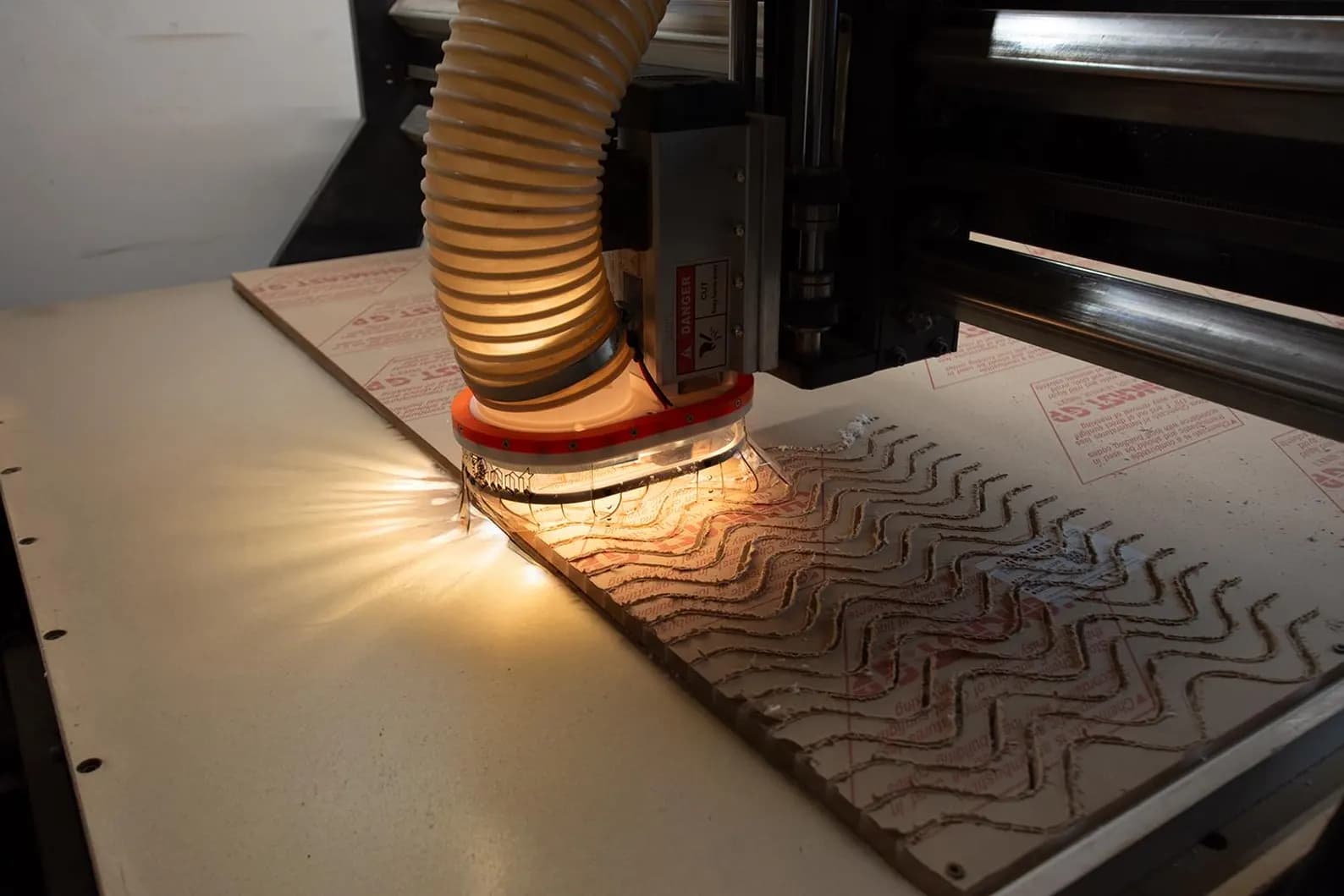
Trim the clear skirt gradually
- Power down the spindle and extraction system.
- Install the actual tool, stock, and tallest workholding expected for the setup.
- Adjust the boot body and rigid inner collar before cutting the vinyl.
- Mark an even trim line that removes the smallest useful amount.
- Detach the magnetic skirt and trim with sharp scissors away from the machine.
- Refit the skirt and perform a powered-off clearance check through the toolpath envelope.
- Repeat only if more clearance is required.
Trim is permanent.
Removing a small amount twice is safer than trying to restore material after one aggressive cut.
Keep separate skirts for different work
Dast Boot includes two 85 mm clear MagLock skirts. A practical setup can keep one longer skirt for deep tools or tall stock and one shorter skirt for engraving, thin sheet, or surfacing work. Label the skirts with their useful setup rather than repeatedly compromising one length.
Special cases
- Surfacing bits: check the full cutter diameter, not just the shank.
- V-bits and long end mills: include the exposed tool length at maximum programmed depth.
- Uneven stock: allow for the highest point and the toolpath direction.
- Clamps: check every clamp the skirt may cross, including handles and screw heads.